The Western Highlands
'Is it Raining There?'
“Is it raining?” I was asked repeatedly by my compatriots residing in the south of England. My diplomatic answer was, “Yes, but it’s an integral feature of the landscape,” which of course is true. This part of Scotland is shaped by the weather. Magnificent lochs stretch for miles, surrounded by almost unreal towering mountains capped with cloud and, even in late May, ribbons of snow. The weather conditions shift constantly between various types of rain, mist and sunshine. I have never been more aware of the weather than I was there, but you learn to work with it, not against it.
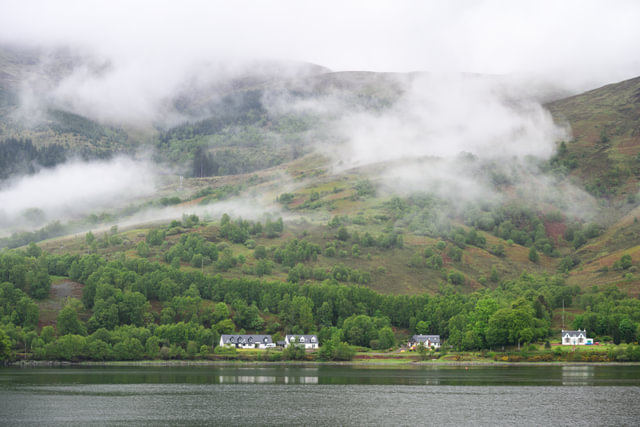
I was based near Glencoe village, where the River Coe joins Loch Leven, and where stunning mountain backdrops combine with atmospheric misty views up and down the loch, which includes a couple of interesting islands. A subsequent invigorating climb on the other side of the loch at Callert fortuitously provided a good elevated view of the two islands: Eilean Munde and the smaller Eilean a’ Chomhraidh, situated on the far right and far left respectively in the picture below.
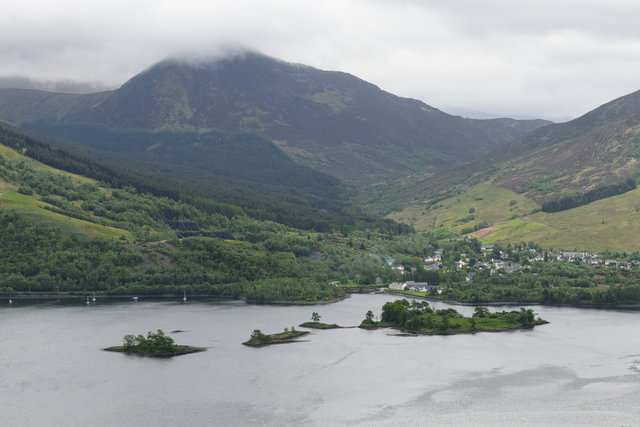
Eilean Munde is the site of an old chapel with the last service being held in 1653 and a graveyard used by a number of local clans, with the last burial taking place in 1972. The other island, Eilean a’ Chomhraidh, otherwise known by the intriguing name “Isle of Discussion”, was a former meeting place where land, and other disputes, were resolved by depositing the factions on the island, with food and drink, and leaving them there until a resolution had been reached. They were then transported further up the loch to the island of Eilean na Bainne, or unsurprisingly the “Isle of Ratification”, where the agreements were, well, ratified. It all seems a very productive and civilised way to sort out arguments; it's a shame we don’t do the same now.
The nearby village of Ballachulish contains a number of interesting sights. St John’s Scottish Episcopal Church, built in 1842, nestles by the side of a hill next to the A82 that snakes its way from Glasgow to Inverness. The present-day church stands beside a much smaller, older building, originally a storehouse, that was converted to a chapel in the 1700s. Though seemingly diminutive and basic, its use as a place of worship reflects a period when Scottish Episcopalians, particularly in the Highlands after the Jacobite risings, often had no secure or lawful church buildings of their own, and worship was maintained locally in improvised, discreet spaces.
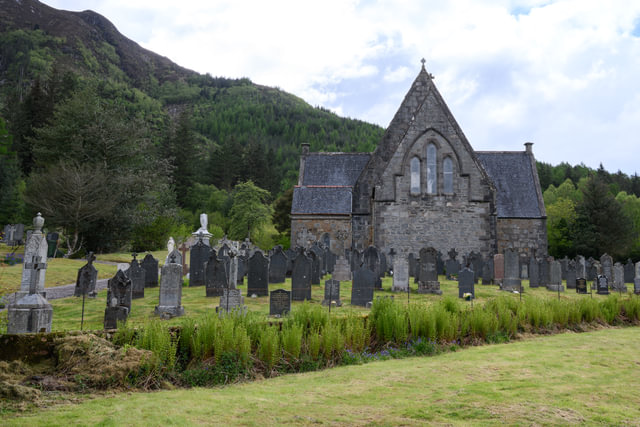
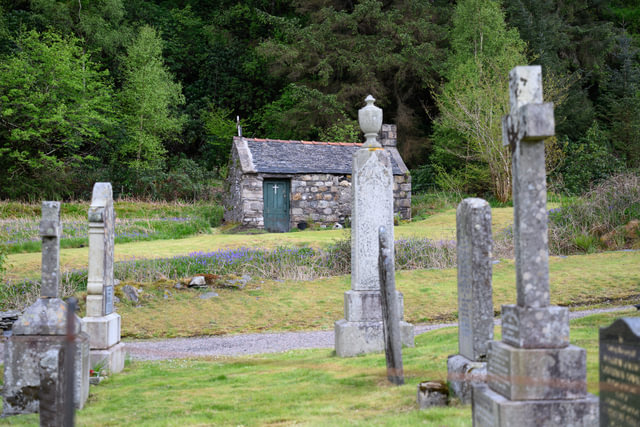
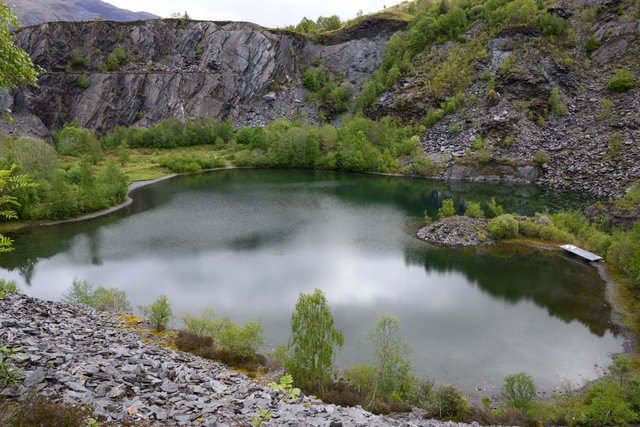
Many of the gravestones in the adjacent cemetery are made from Ballachulish slate, an industry that once dominated this small area. The slate quarry, located within Ballachulish village and closed in 1955, now provides a quiet haven for wildlife and walks of various levels of exertion.
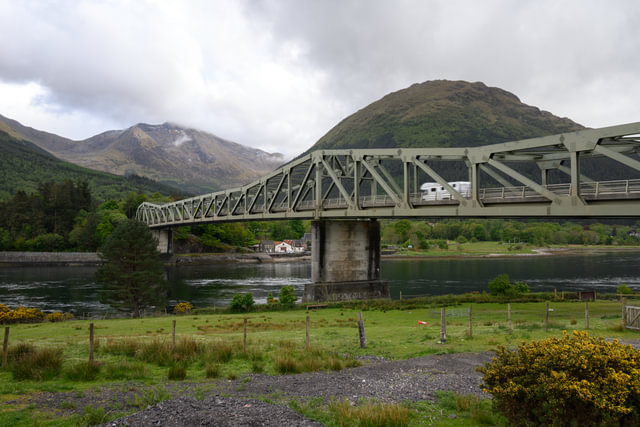
Further along the A82 towards South Ballachulish, the mighty Ballachulish Bridge spans the narrow gap between Loch Leven and Loch Linnhe as it carries the road towards Fort William. Built in 1975, it replaced a ferry that originally linked the two sides.
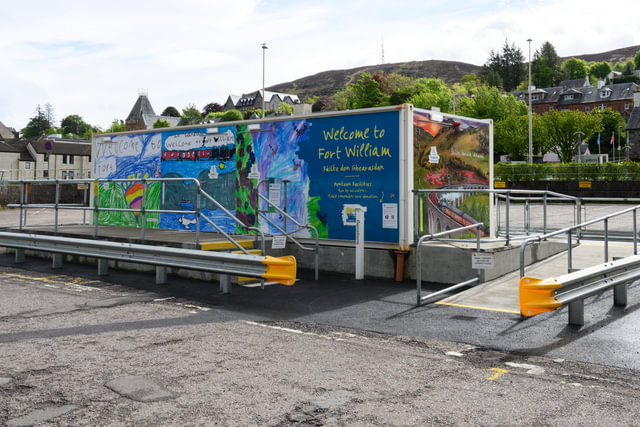
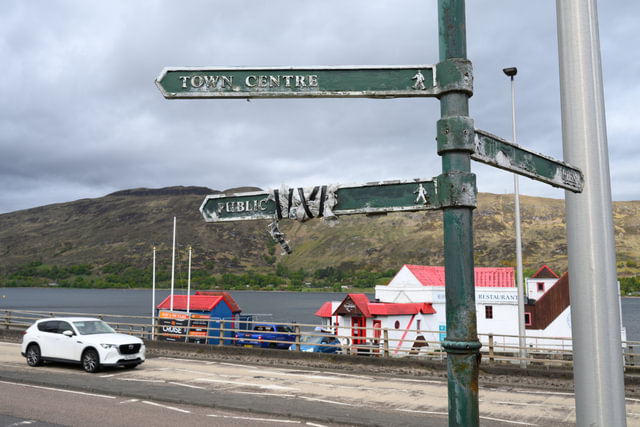
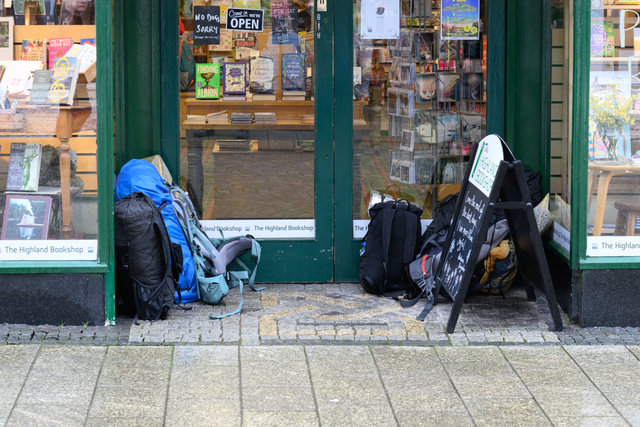
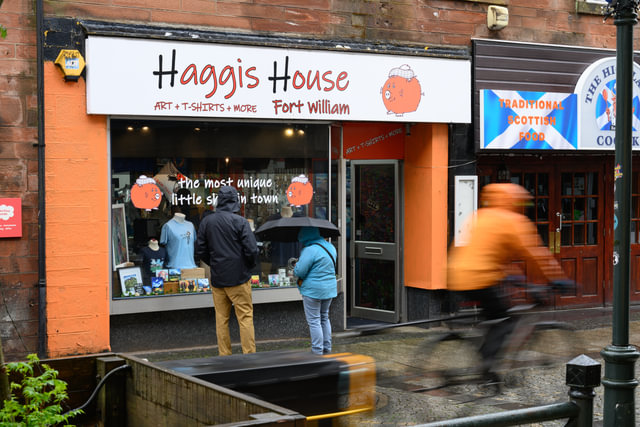
The A82 winds its way to Fort William, which, due to its location nestled at the base of the mighty Ben Nevis, provides a resource hub for locals, general tourists and outdoor-pursuits enthusiasts. The main high street consists of a mix of gift shops selling a multiplicity of hairy cows and “I Went to Fort William and Got This T-shirt” offerings, plus numerous outdoor-gear stores and a sprinkling of essential amenities.
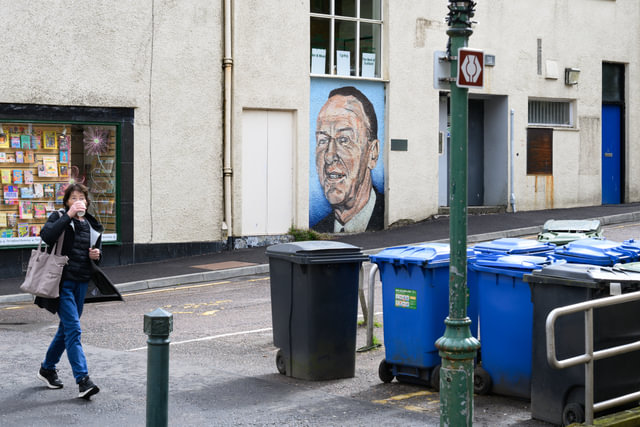
On the wall of a side street I came across a noticeable piece of street art depicting a portrait of a man: a New Zealander named Gerard Mulvey. During the Second World War, Mulvey was a prisoner of war in Eastern Europe who was later sent to the Highlands to recover. There, he met Florence Sandison, a four-year-old girl from Claggan, Fort William, and later wrote a poem about her. Decades later, that memory appears to have been rediscovered through Mulvey’s family, including his New Zealand-based daughter, Christine Thompson, and his artist grandson, Matt Ling, who painted the mural.
Another intriguing art installation literally sits at the official end of the West Highland Way, the 96-mile route from Milngavie to Fort William. A bronze statue, created by the Scottish sculptor David Annand in 2010, depicts a “generic walker” nursing his sore feet and limbs while sitting on one of the benches after completing the monumental walk.
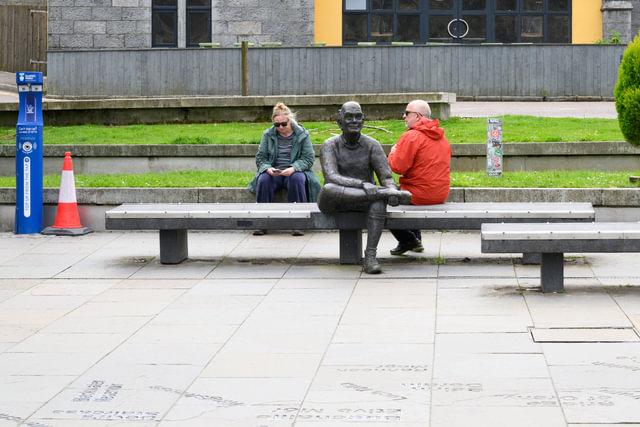
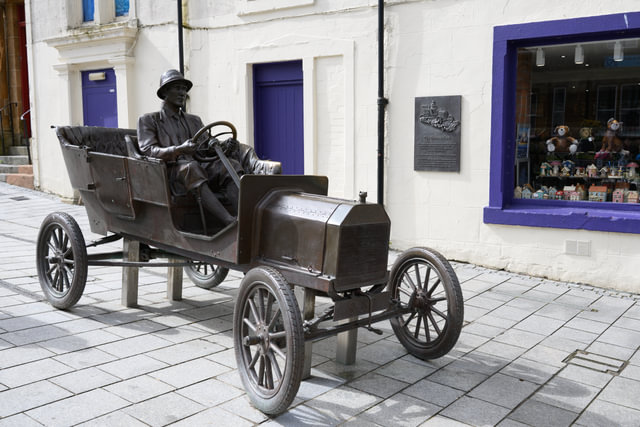
It didn’t stop there either. Nearby is a sculpture of a Model T Ford car and driver, Henry Alexander Jr, whose father, an Edinburgh-based motor dealer, wanted to show that the new American car was superior to anything the British could make. So he challenged his son to drive one to the top of Ben Nevis and back down again in 1911. It took five days to go up the mountain and just one to come down. After adjusting the brakes, he then drove the car back to Edinburgh. The descent was filmed and can be seen on the British Film Institute website.
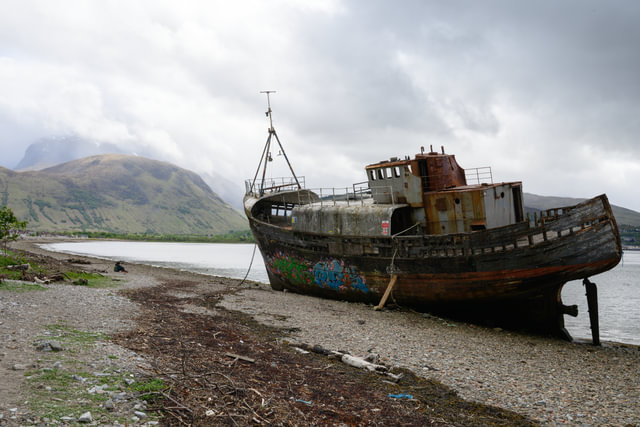
A short diversion to the north-west of Fort William brings you to Corpach, at the south-western sea entrance to the Caledonian Canal. The beach here contains a great viewpoint looking out across Loch Linnhe towards mighty Ben Nevis. Here, an old abandoned boat, the former fishing trawler MV Dayspring, provides a popular juxtaposition with the mountain as it lies abandoned on the shore. Built in 1975, it ran aground after breaking free from its moorings in nearby Camusnagaul Bay during a storm in 2011.
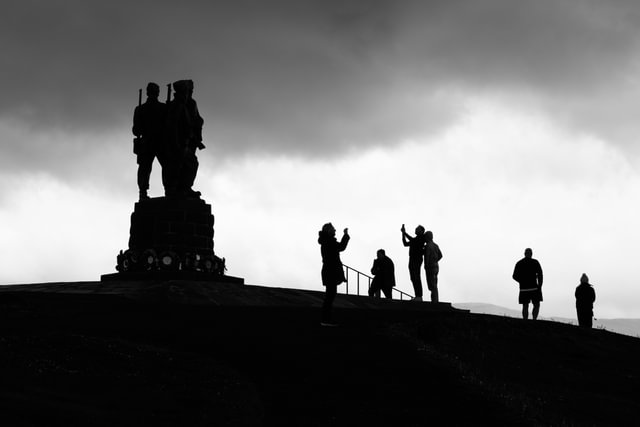
Further along the A82 at Spean Bridge, the Commando Memorial sits just off the road in a striking mountainous landscape. Unveiled in 1952 and dedicated to the British Commando Forces raised during the Second World War, it overlooks the training areas associated with the Commando Training Depot established at Achnacarry Castle. On arriving, I was greeted by an immediate, striking view of visitors taking pictures of the memorial statue in silhouette. Bingo, I didn’t feel the need to take any more pictures there. Together with the nearby Garden of Remembrance, the memorial is both a poignant and powerful place to visit.
Continuing along the road, past the wonderfully named Loch Lochy, though surpassed by 'Loch Loch' near Pitlochry, is Fort Augustus. Even in May it was furiously busy with tourists, primarily as it lies at the southern end of Loch Ness and all the mystique that goes with 'Nessie'. Fighting through the crowds, you eventually reach a popular viewpoint between the River Oich and the Caledonian Canal, with far-reaching views along the loch’s expanse. Alas, at least for the time I was there, not a single candidate monster was spotted.
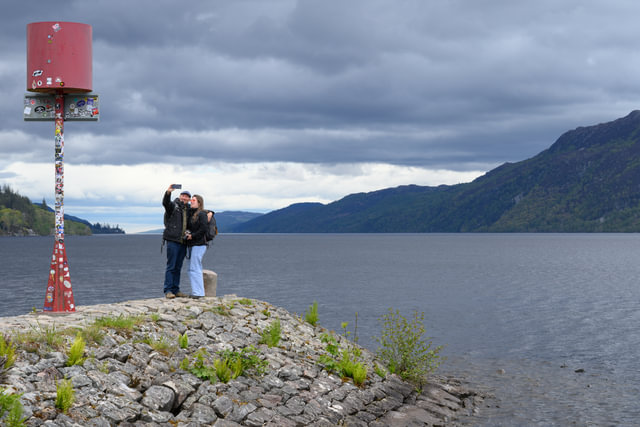
Another day, and a wild impulse to do some hiking, led me to the imposing Three Sisters of Glen Coe, three steep-sided ridges that extend north into the glen. However, at 7.5 miles long, with over 1,460 m of ascent, it was a bit out of my league.
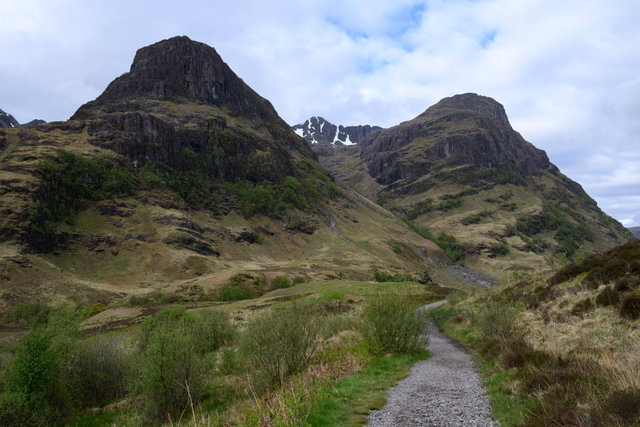
Taking a somewhat more relaxed path on the return walk, the sound of distant bagpipes came echoing mysteriously through the glen, and a swift scan of the terrain revealed a lone piper serenading us from a viewpoint stop just off the main road. As I didn’t have a particularly long lens with me, I had to make an artistic/pragmatic decision to document at least something, so the resulting picture is more of a fun game of “where’s the piper?”.
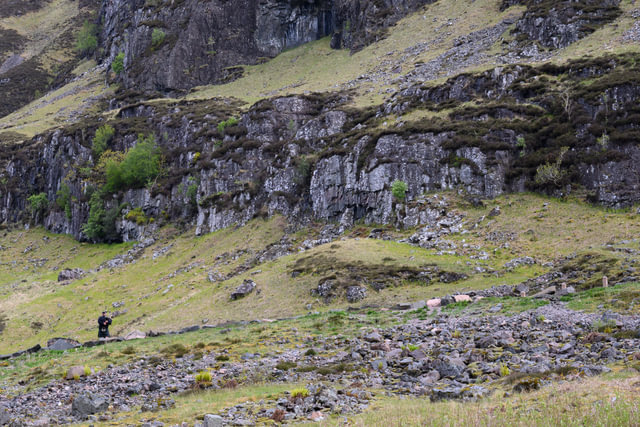
Finally, no visit to this part of the world would be complete without at least a cursory look at Castle Stalker, otherwise known as the “Castle of Aaargh” from the movie Monty Python and the Holy Grail. Located on an islet in tranquil Loch Laich, just north of Port Appin, it is privately owned, though a limited number of public tours are available by prior arrangement. Fortunately, I didn’t encounter any taunting from French guards with "outrageous accents" while there. Unfortunately, the dreaded Scottish dreich set in, leaving me with little option other than a study in atmospheric, moody monochrome.
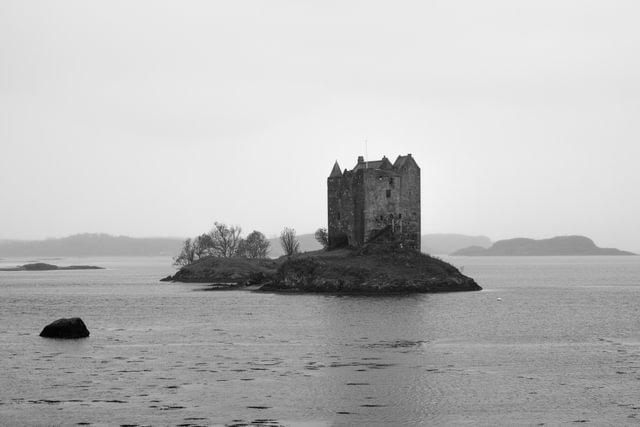
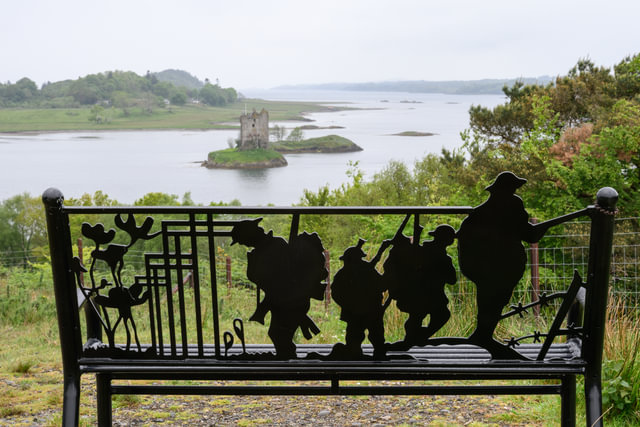
A quick pit stop in the delightful Linnhe Storehouse & Cafe for a coffee however also provided a lift in the weather and another view of the castle, together with one of the most striking bench designs I have seen, presumably commemorating the local Appin men who lost their lives during the First World War.
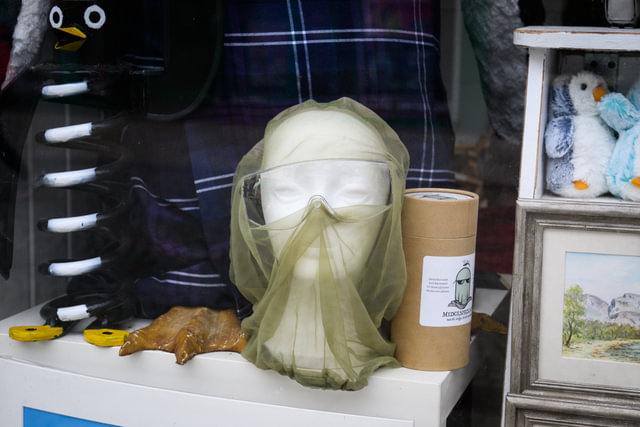
The Highlands provided a welcome, peaceful retreat from life in London. They make it easy to switch off and immerse yourself in their rugged beauty. I only scratched the surface of the sights and features of the area, missing a visit to Glen Etive, a stunning mountain-backdropped region famous for its feature in the James Bond movie Skyfall and a trip to the top of Ben Nevis in better conditions. I have no doubt I'll be back. I'm just thankful that the dreaded midge season was yet to begin, so I didn't have to equip myself with any chic protective gear.